We have screwed everything up. I'm no UnaBomber, but this is my little manifesto, a microfesto. The Industrial Revolution (IR) ruined humanity. With prodigious production came prodigious consumption. With production and consumption came, I don't want to call it. Greed? Let's say "self-centeredness". The IR ushered in the growth of cities beyond what was reasonably sustainable without government-organized infrastructure (...and don't get me started on bureaucracy) and an over-arching demand on resources. Cities became centers of commerce (if only to sustain themselves as cities) and the basic human need of community was annihilated. By community, I mean the interdependence and cohesion and shared value of people. And along the way, we destroyed any real concept of commerce. Today, it's a shell game, a computer simulation, The SIMS with flesh and bones. There is absolutely no connection, other than theoretical, between the way I make my money and the way I provide my family food, shelter, and housing. It's all bartered out of relevance. Pretend.
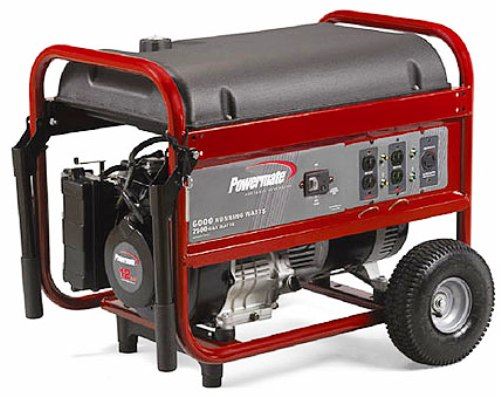
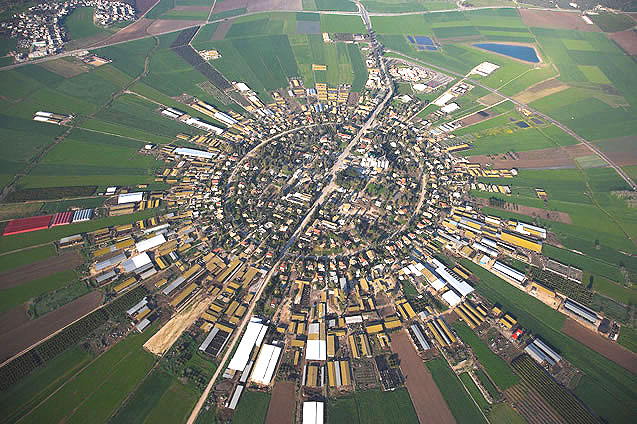
 When the Doomsday Scenario unfolds, either by regional EMP or slow death by petro-starvation, we're all dead in the water. The first wave will shred the veil of “civilization”. The most vicious vandals will plunder every retail outlet – stripping the shelves of all life-necessities as well as all the “luxuries” of life that will never do them any good in a post-apocalyptic world. There'll be nothing left to eat in the stores; we’ll only have what’s in our kitchen pantry. The grid will go down and our houses will be useless boxes providing nothing more than shelter from the rain. We won't be able to cook, heat, cool, launder, bathe or anything of the sort. Gangs will roam the streets attacking the weak-minded, unprepared, and unarmed. God help you if you have a generator (which I do). In the stone-deaf silence of post-world, the sound of a generator running will cry out louder than a sorority girl whining “I’m so drunk”. There’s going to be trouble. I think the vast majority of city-dwelling humans are only 72 hours away from mass anarchy and hysteria at the end of which the only solution will be to walk to the countryside and beg or fight for the raw resources that we used to pay for with paper (pretend) money. With no skills and no training and no resolve to do the hard work of subsistence, bank tellers and software engineers will discover the real value of an hourly wage - an hour's work. In a generation or two, after death and destruction of biblical proportion, we'll settle back into our little, self-sustaining villages. The only power sources are humans and animals (maybe real old-fashion wind and water engines) and the only raw resources are water, dirt, and seeds. Our human ingenuity and unchecked desire will have wrought on own near-extermination. But we will survive. And at the end of a hard week, we'll gather in the town square and the carpenter will receive his chickens in trade for the plow he made and he'll tell a few jokes and lighten the pain of our sore backs. And we'll see the grandkids playing with their cousins. And some new mom will publicly thank the old widow who helped deliver her baby. And I'll trade you an oak basket for a pair of leather gloves. And we'll all pray for rain. I swear to you, we will all pray for rain. The population explosion of the 20th Century is a direct result of the Industrial Revolution and a happy result insofar as health conditions and total health improved. That is one of the ironies of the IR syndrome. Man's quest to live "better" (e.g. free from disease, free from debilitating pain, free from harm, war, pestilence, Britney Spears, etc) never ends. Once free of those basic miseries, other lesser inconveniences became the target of our ingenuity. We desire liberation from Summer's heat, Winter's cold, Spring's rain, and Autumn's leaf raking (off our pretend pastures) so we invent Home Depot and charge it with the responsibility of reserving some of the soft money we give it so they can sponsor a NASCAR driver who we can watch alone on Sunday on TV in our cool, clean, well appointed home instead of going to the town square and watching 3 year-olds race each other in the grassy park (again, see Nahalal). The IR set man free from many of the onerous burdens of manual labor. Along with the high pressure, hyper-productivity of modern life, there is now also an epidemic of leisure. The epidemic has many victims. We are not physically healthy – we’re careening toward universal obesity. Perhaps worse than that is the portion of the global (especially US/Western) economy that is dependent on leisure – not doing anything productive. The entertainment sector, the food/restaurant/beverage sector, the home décor sector, the sport/recreation/leisure sector (spectator and participant), the travel sector, and on and on; these huge components of our economy all developed around the superfluousness of disposable time and money. How fragile is an economy that is so heavily dependent on the fact that people are NOT working very much? Add to that the proliferation of service sectors (I’ll wash your shirts if you change my oil) and bureaucracy (public and private) and we discover that our economies are towers of Jenga blocks, precariously teetering with no visible means of support. When man’s basic needs are food, clothing, and shelter and very little of our economy (or personal expenditures) are devoted to that, our economic health must necessarily be in dire peril. When the bubble bursts, the debris of an economy no more substantial than butterfly wings will astound all. Think Detroit without GM and Ford and no public infrastructure to maintain the pretense of civility. There’ll be financial carnage that will make the Great Depression look like a two year-old’s temper tantrum. Add to that, the “virtual” nature of our monetary system… I recently calculated that I actually only handle little more than 1% of my total income as live money. I never carry cash or coin. My pay is automatically deposited and most of my disbursements are electronically processed. If the grid goes down, what am I going to take to WalMart to trade for some milk and bread (assuming there was anything left to actually trade for)? A regional natural disaster, a screwdriver left in the wrong place at a power plant, a well-place terrorist attack, or any other variety of calamity would wreak havoc beyond our ability to comprehend, let alone cope.
What can a person do to endure such a calamity? I am taking precautions (stored water, a bit of hard currency, a pathetically wimpish .22 calibre Derringer) to survive the acute phase of the crisis, but I doubt it’s anywhere near enough. I really don’t think city dwellers have any capacity to deal with more than two or three days of a real crisis. After that, we’ll see a reversal of the rural exodus of the last century. The highways will be choked with the smart people who figure out that food doesn’t grow on bike paths. We’ll head back to the farms that we’ve despised for a hundred years and make an inept plea for the hard working descendants of European immigrants to have mercy on us, to take us in, board us and feed us… in return for a day’s labor. That’s a possible, perhaps likely response to the coming calamity, but is there a better solution?
I've got no clue. Sociology is at once the worst "science" and also the most important field of study we may have. The same human nature that compels us to connect with one another also seems to drive us toward lesser ends. Consumption, Conformity, and Competition are the gravitational forces that drive society "forward". Cataclysm is the only corrective tool Nature seems to have in her quiver and it is a soon-coming cataclysm that I fear.
It would be nice if we could all come to our senses on our own. The Quakers and the Shakers carved out niches of their own – simplistic, self-reliant communities. But their cultures were so obtuse that now the only influence they have is on the tourism economies of regions that surround their compounds. [My gosh, can there be a greater irony - the very thing that drove them to live apart is now a gawking spectacle among those that refuse to live apart? Plus, nearby you can by handmade fudge for $5.95 a pound.] I wonder if there will ever be a movement of people who see the end coming (socio-economically, not spiritually)? (and yes, there is such a movement, I don't mean to dimiss them just to make my point.) Are we contaminated with such hubris that we think we will forever progress along this ever thinning single rail of “prosperity”? I’m thankful for everything the Industrial Revolution has brought me: a luxurious car, an allergen-free pillow, no-iron slacks, a cure for erectile dysfunction, crustless bread, Rogaine, hybridized corn, tall buildings, neon signs, hip-hop, bronze tombstones, the Olympics, water-flushing toilets, credit-card sized calculators, and 10mbps wifi internet downloads. Life is so sweet. I’m scared to death of doing without any of it… and I am sure scared of living with it.

 You've got to love a story that states: "Over the last few decades, western civilisations have busily sown the seeds of their own destruction." Right up my paranoid alley. Please read the full article and note the middle third which discusses grid failure and consequences thereof.